Posts tagged “iceberg”
Why Beginners Have a Hard Time With Simple Advice

How to start as a beginner? This is arguably the most important question of all in any domain, including fitness and the Zettelkasten Method. The typical and best approach is to start with simple explanations and instructions. In fitness, you begin by incorporating regular movement and small diet changes. Assuming that a fictional client doesn’t exercise and has an average diet, the following two changes will melt quite a lot of belly fat:
One (and another) Gear in the Zettelkasten Machine: A Deep Dive into a Key Mechanism

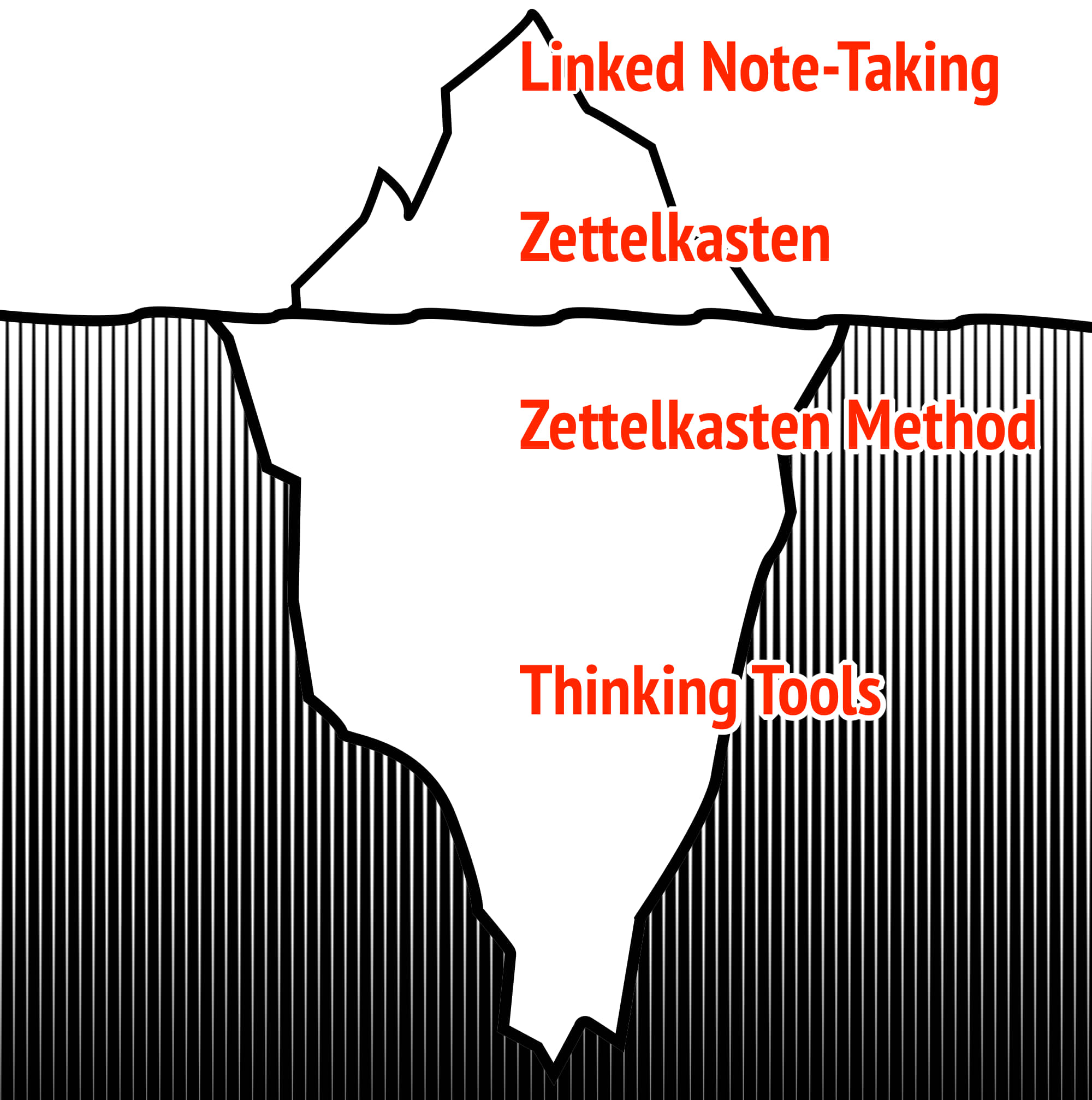
This piece has two goals: Provide a tool to assess the benefits of various methods and tools for writing and thinking. A deeper dive into the iceberg of the Zettelkasten Method. The effects of low-intensity training (LIT) and deep thinking via the Zettelkasten method depend on their implementation, as method and outcome are inseparable.
The Complete Guide to Atomic Note-Taking

Atomic note-taking is one of the buzzwords surrounding the Zettelkasten Method. In short, it is about putting one idea and one idea only on a note. With this guide, I will take you into the exciting deep waters of both the Zettelkasten and thinking skills. Having read this article, you will both know the theory and the practice, the art and the science of atomic note-taking.
The Iceberg Theory of the Zettelkasten Method — Exploring the Depths
The Zettelkasten Method is not only a method of knowledge work. It is also a diagnostic tool. To demonstrate this, I would like to start with a short story from my work as a health and fitness trainer: A client contacted me because she wanted to lose weight. We discussed her situation and I sent her the first steps. One month later, she reported failure. She was unable to implement the program that we had discussed together. We reduced the program because my client said she was unable to implement it as planned due to time constraints and stress. The pattern repeated the next month. So we looked more closely for the causes. A surprising problem came to light: